
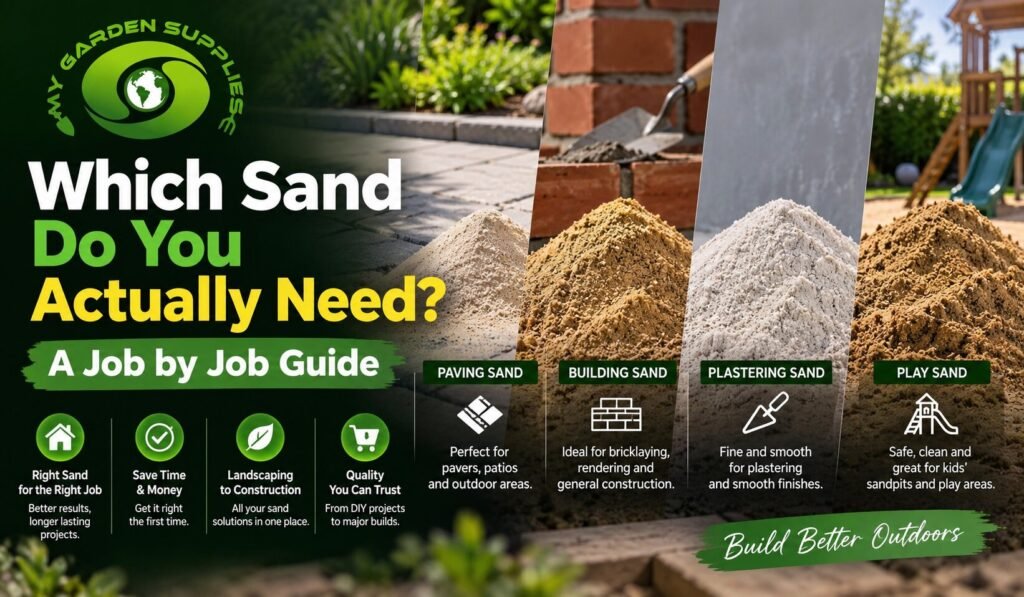
Sand is the most misunderstood product in any landscaping yard. It all looks broadly the same in a pile; it all pours the same way out of a bucket, and the names sound like marketing rather than meaningful distinctions. So people order whatever is cheapest or whatever the yard mentions first, and then wonder why the mortar cracked, the pavers sank in patches, or the concrete never quite reached the strength it should have.
The differences are real, and they come down to two properties: how sharp the grains are, and how much fine clay material is mixed in with them. Everything else follows from that.
Fatty sand versus sharp sand
Sand with clay content is described in the trade as fatty or plastic. Squeeze a handful, and it holds its shape. That clay is not contamination; it is the point. It makes mortar buttery and workable, so a bricklayer can spread it, hold a brick on it and adjust the joint without the mix collapsing.
Washed sand has had those fines removed. The grains are angular, and they lock against each other rather than sliding, which is exactly what concrete needs and exactly what you want under a paver. Squeeze a handful, and it falls apart.
Neither is better. They are opposites, and each one fails badly at the other’s job.
Brick sand, and why colour matters more than you think
Brick sand is the fatty one, made for mortar and stonework. What surprises people is that it comes in colours, and the colour is not decorative fussiness. Mortar joints make up a noticeable share of a wall’s visible surface, and the sand is what pigments them. Get it wrong, and you have permanently mismatched joints on an otherwise good wall.
That is why the range covers several tones. Mukadilla brick sand is the one to reach for when the job calls for a light coloured mortar, and it doubles as a bedding base under pond liners and above ground pools. Alongside it sit orange, white and beige, and ivory white options for matching different brick tones.
Two practical notes. Because these are naturally sourced, tone varies slightly between loads, so order the whole job in one delivery rather than topping up later. And if you are matching existing brickwork, bring a brick to the yard rather than a photo, because screens lie about colour.
Concrete sand, the sharp one
Concrete sand is washed and coarse, with the fines taken out. The Bacchus Marsh concrete sand is the standard choice for mixing concrete on site.
The reason fines matter here is worth understanding. Clay particles coat the sand grains and get between the cement paste and the aggregate, which weakens the bond. They also carry extra water into the mix. A concrete batch made with brick sand can look perfectly normal while curing to a fraction of the strength you were counting on, which is the sort of failure you only discover under load. Sand for structural concrete is covered by AS 2758.1, and this is one of the places where using the properly graded product genuinely matters.
Packing sand for paving
Packing sand is the bedding layer that goes under pavers. It screeds to a consistent depth, compacts under the paver without staying spongy, and lets water move through rather than pooling.
The bedding layer is thinner than most people expect, usually somewhere around 25mm to 30mm once screeded. It is a levelling course, not a base. The load carrying work happens in the compacted crushed rock underneath it, and trying to correct an uneven base by piling on more sand is the single most common cause of pavers that sink unevenly a year later. Our guide on laying pavers in a backyard covers how the layers stack up.
Washed fine sand
Washed fine sand is the clean, low-fines option for jobs where you want no clay at all. Bedding around pipes and conduit, backfilling trenches, rendering mixes, sandpits and pool bases all sit here. If a job involves something being surrounded by sand rather than sitting on it, this is usually the one.
The three swaps that cost money
Brick sand under pavers. The clay holds water, swells and shifts through Melbourne’s wet winters, and the paving moves with it. This is the most frequent DIY mistake we see.
Fine or unwashed sand in concrete. Weakens the mix in a way that is invisible until it is not.
Packing sand in mortar. Without the clay, the mix is harsh and short; it drags under the trowel, and joints are difficult to finish neatly.
Ordering and storing it
One thing to plan around in a Victorian winter: sand arrives damp, and damp sand is heavier and clumpier than the same volume in February. It also bulks up, meaning wet sand occupies more space than dry sand of the same weight, so do not panic if a load looks larger than expected. Tarp the pile if it is going to sit, both to keep rain out and to stop it washing across the driveway.
Two safety points. Dry sand and the dust that comes off it contain crystalline silica, so keep a mask on when handling it dry or sweeping it up, and wet it down rather than blowing it around. And keep children off sand stockpiles entirely, because loose piles can collapse and bury someone in seconds.
FAQs
Can I use brick sand under pavers if that is what I already have?
It is not worth it. The clay content holds moisture and moves with wet and dry cycles, so the paving surface follows it. If you have leftover brick sand, keep it for mortar or a garden project and buy the right bedding sand for the paving.
What does fatty sand actually mean?
It is trade shorthand for sand carrying enough clay to feel smooth and hold together when squeezed. That plasticity is what makes mortar workable under a trowel. The word describes the handling feel, not the quality.
Why is there more than one colour of brick sand?
Because the sand pigments the mortar, and mortar joints are a visible part of the finished wall. Matching the sand tone to the brick is how you get joints that look intentional rather than patched in.
Is washed fine sand safe for a children’s sandpit?
Washed sand is the right category for it, since the fines and clay have been removed. Confirm the specific product suits play use when you order, and keep it covered between uses so it stays clean.
How long can I leave sand in a pile before using it?
Indefinitely in practical terms, as long as it is covered. Sand does not spoil. What it does is collect leaves, weed seeds and grit, and lose or gain moisture, all of which affect how it mixes. Tarp it, and it will be fine.
From Soil to Stone, We’ve Got Your Project Covered
Sand is one of the few products genuinely worth looking at before it lands on your driveway. Colour varies between natural loads, and a tone that seemed right on a phone screen can be obviously off once it is in a mortar joint. Come and see the range in the yard, bring a brick or a paver if you are matching something, and we will point you to the right product for the job rather than the closest sounding name.
Call (03) 9716 1333
Email enquiry@cemixvic.com.au
Yard at 2410 Plenty Rd, Whittlesea VIC 3757
Full range at mygardensupplies.com.au