
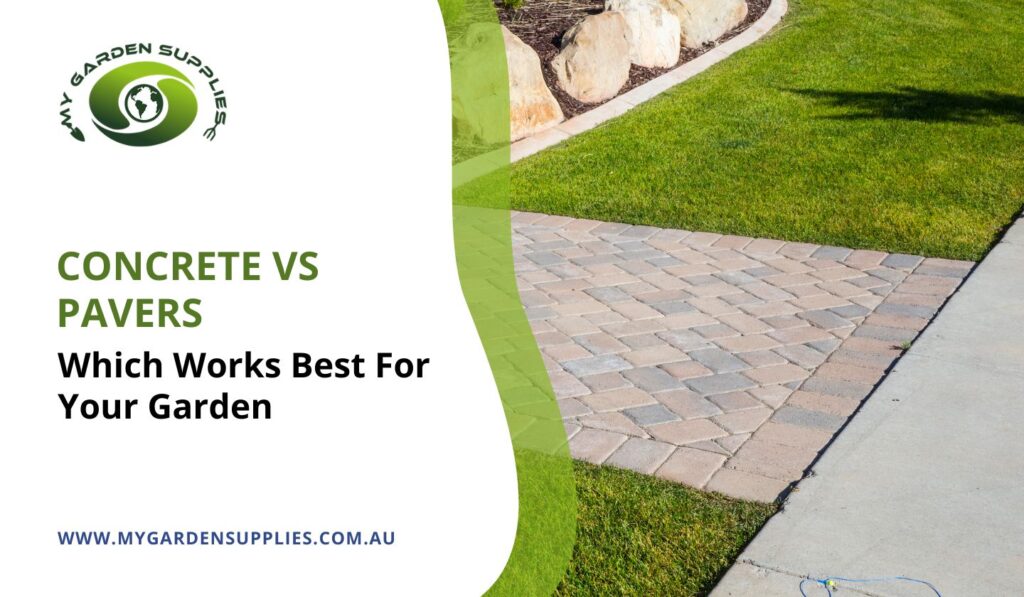
If you’re thinking of building an outdoor landscaping project, then concrete and pavers are the most popular. Both are used to make driveways, walkways, patios and pool decks. However, both are unique and feature different costs, aesthetics, maintenance needs and design limits.
In this blog, you’ll learn the key difference between concrete and pavers, which works best for gardens and other outdoor areas and crucial information about reliable Epping garden supplies to help you make informed decisions and get the best supplies for your landscaping projects!
Aesthetics & Design Flexibility
Concrete creates a smooth, continuous surface that fits modern, minimalist styles. It can also be coloured, stamped or finished as exposed aggregate for texture.
Still, large areas of concrete can appear monolithic without careful design touches.
In contrast, pavers come in many shapes, sizes and colours that let you build patterns like herringbone or basketweave.
Therefore, pavers are better when you want texture, accents or curves in the garden.
Cost
Plain concrete usually costs less per square metre than pavers, which makes it a budget-friendly option for big surfaces. Decorative concrete finishes and extra labour add to the price. They’re more budget-friendly and a wise choice if you’re tight on budget.
Pavers demand higher material and installation costs up front, but replacing damaged sections is cheap and simple. If you value curb appeal and flexibility, pavers can be worth the extra cost.
Durability & load-bearing
Concrete has strong compressive strength, so it handles heavy loads well. Reinforcing it with steel mesh or fibre reduces cracking. Pavers can also carry vehicle loads, but only when you install a well-compacted base.
Otherwise, pavers may settle or shift under repeated weight. For heavy machinery or very high loads, concrete is the safer choice. For normal residential driveways, high-quality interlocking pavers on a proper base perform reliably, too.
Installation Needs
Pouring concrete is faster for large areas because it covers the whole surface at once. However, it needs skilled finishing to avoid cracks and unevenness. When concrete cracks, patches can be visible unless matched carefully.
Pavers take more labour to lay because each unit is placed and joined. Yet, pavers are easier to repair later.
Maintenance
Both surfaces need less upkeep than soft options, but their care differs. Concrete requires cleaning and resealing every few years, depending on the finish, and you should repair cracks early.
Pavers need joint care: regular sweeping, occasional re-sanding and weed control. If a paver settles, you should lift and re-level it. Overall, pavers need slightly more frequent attention, but their ease of repair offsets that need.
Get Top-Quality Concrete & Pavers With My Garden Supplies & Concrete
My Garden Supplies & Concrete, the most trusted and reliable name for Garden Supplies in Beveridge offers a complete range of quality landscaping and building supplies to transform any outdoor space.
Our team of experts understands your needs and provides personalised services and guides you in choosing the right product for your project.
Whether you want high-quality pavers or concrete blocks, we’re your ultimate building partner.
Contact My Garden Supplies & Concrete today and get top-notch supplies for your landscaping project!
Frequently Asked Questions
1. Are pavers better than concrete for driveways?
Pavers are highly aesthetic, durable and low-maintenance. Even though plain concrete is cheaper upfront, pavers last significantly longer. This makes it a better choice in the long run.
2. Is exposed aggregate concrete better than pavers for patios?
Exposed aggregate concrete is generally considered superior to pavers because of its monolithic, crack-resistant surface and minimal maintenance needs.
3. Which is better for coastal areas: concrete or pavers?
Pavers are usually a better choice as they require a lower upfront cost and are salt-resistant. Additionally, paver systems interlock, allowing them to shift with the ground and withstand extreme moisture and sea air.