
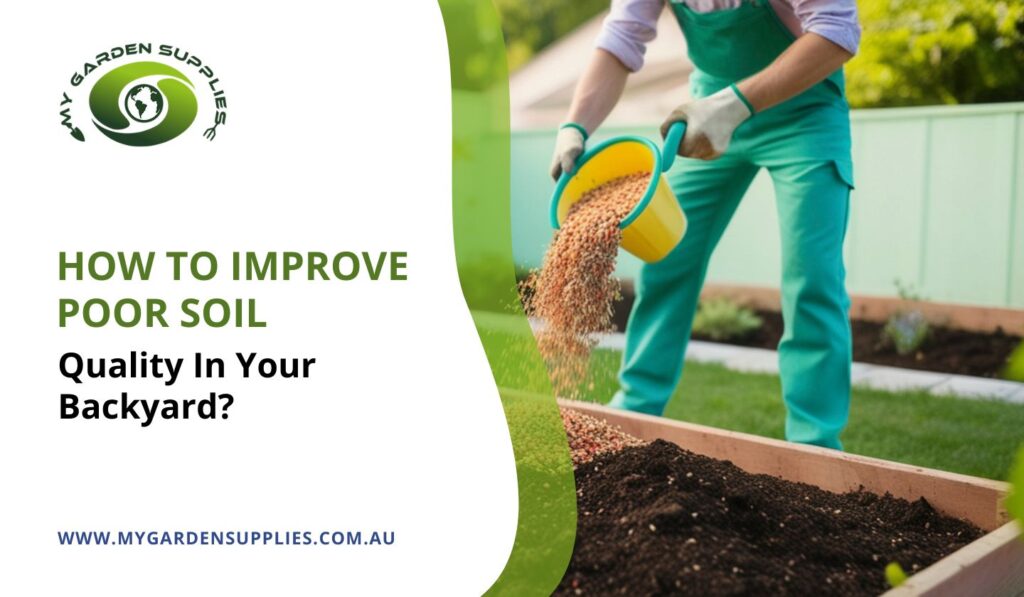
If you are a gardener or a landscaper, then knowing how to improve the soil quality of your backyard can be a game-changer. You can transform compacted, nutrient-poor, or unbalanced soil into a fertile, living foundation for a thriving garden, without expensive chemicals.
In this comprehensive guide, you’ll explore the expert strategies to improve the soil quality and get the outdoor space of your dreams. Additionally, we’ll also give you crucial information about a reliable Somerton Garden Supplier to get the quality soil and other gardening supplies.
Test Your Soil First
Before adding anything, it’s essential to test your soil to understand exactly what’s missing. Most plants thrive at pH 6.0–7.0. If the soil is too acidic (below 6.0), plants can’t access key nutrients. Similarly, if it’s too alkaline (above 7.5), the same problem occurs. This test also identifies deficiencies in nitrogen (N), phosphorus (P), potassium (K), and sulphur. Ultimately, it tells you whether you have sandy, clay, or loam soil, and each type needs different fixes.
Add Organic Matter
Compost is the golden key to improving any soil type. It improves structure and adds body to sandy soil while loosening clay. Second, it boosts water retention, thereby helping soil hold moisture longer. Lastly, it feeds microbes by providing food for beneficial soil organisms.
Use Aged Manure
Aged manure boosts fertility safely, but you must use it correctly. Cow, horse, and chicken manure aged for at least six months is rich in nitrogen and nutrients. Never use fresh manure, because it burns plants and can contain pathogens. After aging manure for at least six months, mix it into compost or work it directly into soil before planting.
Mulch Heavily
In addition, mulch protects and nourishes the soil. It reduces evaporation and keeps soil cool. Additionally, it suppresses weeds without herbicides. Over time, it breaks down into organic matter. To apply mulch properly, use straw, wood chips, grass clippings, or leaf mould. Then, apply 2–4 inches around plants.
Aerate Compacted Soil
However, if your soil is hard and water pools on top, it’s compacted. For lawns, rent a core aerator twice yearly in spring and fall to pull soil plugs. For beds, loosen soil with a garden fork, but don’t over-till, since this harms microbes. After aerating, top-dress with compost.
Avoid Overusing Herbicides
Although weeds can seem problematic, they can actually benefit soil biodiversity. Instead of using herbicides, pull weeds by hand and use mulch to suppress them. You can also let some weeds like clover stay, because they fix nitrogen.
Get Top-Quality Soil From My Garden Supplies & Concrete
My Garden Supplies & Concrete, one of the most trusted and reliable names for garden supplies in Upfield, offers top-notch garden and concrete supplies to transform any outdoor space.
Our expert team understand the needs of individuals who want to build their dream space and provides personalised services and products to fulfil their dreams.
Whether you’re a homeowner, a landscaper or a builder, we’re your one-stop solution.
Contact My Garden Supplies & Concrete today and build the garden of your dreams!
Frequently Asked Questions
1. What is the best soil for a vegetable garden?
The best soil for a vegetable garden in Australia is a loam soil. This soil is the perfect blend of clay for holding nutrients, sandy grit for drainage and organic matter to feed your vegetables and other plants.
2. How to improve garden or backyard soil without digging?
You can improve your garden or backyard soil by top-dressing and other no-dig methods. This builds a living, nutrient-dense top layer that preserves the natural structure of the soil and allows microbes and earthworms to loosen the soil.
3. What organic matter should be added to soil?
Organic matter like compost, leaf mould, aged animal manure and cover crops are generally added to the soil for improving its structure, water holding capacity and nutrient delivery.